


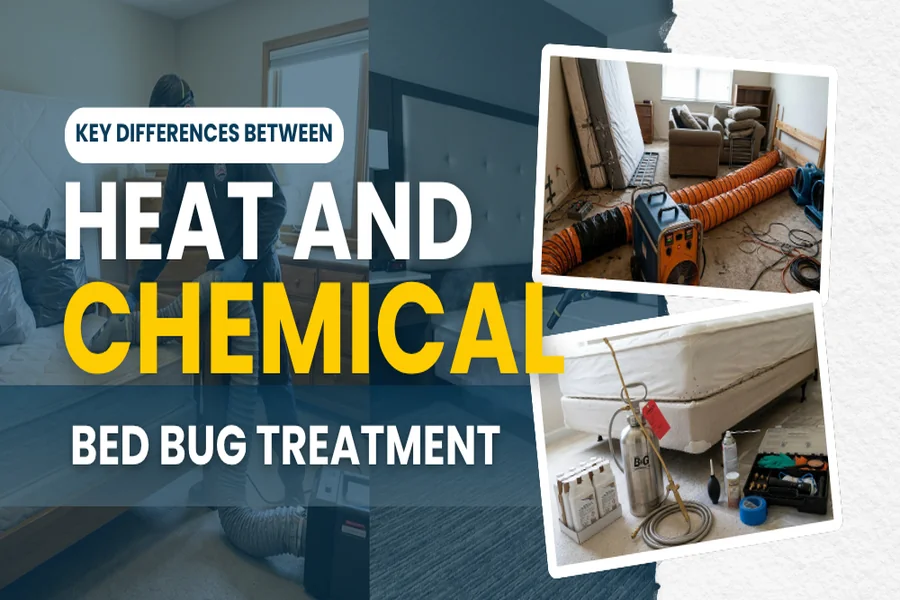
When bed bugs appear, most people want one thing: fast and complete elimination. Choosing between treatment options can feel overwhelming, especially when each method claims to be effective. Understanding heat vs chemical bed bug treatment helps you make a more informed decision based on your situation.
Both methods work, but they solve the problem in different ways. By comparing heat vs chemical bed bug treatment, you can better understand timelines, effectiveness, and which option fits your home, building type, and level of infestation.
How Heat and Chemical Treatments Work
To begin with, it’s important to understand how each method targets bed bugs. When evaluating heat vs chemical bed bug treatment, the biggest difference lies in how the treatments reach and eliminate pests.
Heat treatment raises the temperature of the whole space to levels that kill bed bugs at all life stages, including eggs. Because heat penetrates cracks, seams, and furniture, it works as a whole-room solution rather than targeting specific areas.
On the other hand, chemical treatment relies on insecticides applied to surfaces where bed bugs travel and hide. The exterminators strategically place these products along baseboards, furniture joints, and other known harborages.
Before deciding, consider these key differences:
- Heat treatment works by eliminating bed bugs through sustained high temperatures
- Chemical treatment depends on contact or exposure to treated surfaces
- Heat targets the entire space, while chemicals focus on specific areas
As a result, comparing heat vs chemical bed bug treatment starts with understanding how each method reaches the infestation.
Key Benefits and Limitations of Each Method
Once you understand how they work, the next step is weighing their advantages and limitations. In many cases, the decision comes down to priorities such as speed, convenience, and long-term protection.
Here’s a clear breakdown to guide your comparison:
Heat Treatment Benefits:
- Often completed in a single visit
- Reaches hidden areas without needing direct application
- Leaves no chemical residue when properly done
Heat Treatment Limitations:
- Requires professional equipment and monitoring
- You might need to remove sensitive items
- Effectiveness depends on proper heat distribution
Chemical Treatment Benefits:
- Provides residual protection after application
- Can target specific problem areas
- Useful for follow-up or maintenance strategies
Chemical Treatment Limitations:
- May require multiple visits
- Relies on proper placement and coverage
- Some bed bugs may show resistance to certain products
Which Option Fits Your Situation Best
Now that you understand the cons and pros, the next step is choosing the right approach. There is no universal answer, but common patterns can help guide your decision.
To simplify your choice, consider these scenarios:
- Choose heat for fast, whole-room elimination
- Choose chemical treatment for ongoing or targeted control
- Consider a combined approach for complex infestations
In real-world situations, professionals often use a hybrid strategy. For example, heat may quickly eliminate most bed bugs, while chemical applications provide residual protection afterward.
Additionally, building type plays a major role. In apartments or multi-unit properties, coordination between units often matters more than the method itself. This is why evaluating heat vs chemical bed bug treatment should always include the scope of the infestation.
Ultimately, a professional inspection helps determine whether the issue is isolated or widespread. That assessment is often more important than choosing between methods alone.
Preparation and Aftercare That Improve Results
Regardless of the method you choose, preparation and follow-up directly affect success. Even the best plan can fall short without proper setup and monitoring.
Before treatment, focus on these essential preparation steps:
- Reduce clutter near beds and baseboards
- Follow proper laundry handling (bag, heat dry, re-bag)
- Avoid moving items between rooms
After treatment, simple habits make a big difference:
- Keep sleeping areas easy to inspect
- Watch for signs like spotting or shed skins
- Maintain organization to support monitoring
It’s also important to avoid common mistakes. For example, foggers or “bug bombs” rarely reach hidden areas and may cause bed bugs to spread deeper into walls or adjacent spaces.
When reviewing heat vs chemical bed bug treatment, remember that preparation and aftercare often determine the outcome more than the method itself.
Deciding the Right Bed Bug Treatment for Your Home
Choosing the right solution depends on your situation, timeline, and the extent of the infestation. While heat offers fast, whole-space elimination, chemical methods provide targeted control and added residual protection when needed.
If you’re weighing your options, understanding heat vs. chemical bed bug treatment can help you make a more confident decision. With the right approach, proper preparation, and consistent follow-up, you can eliminate bed bugs effectively and reduce the risk of a recurrence.
