


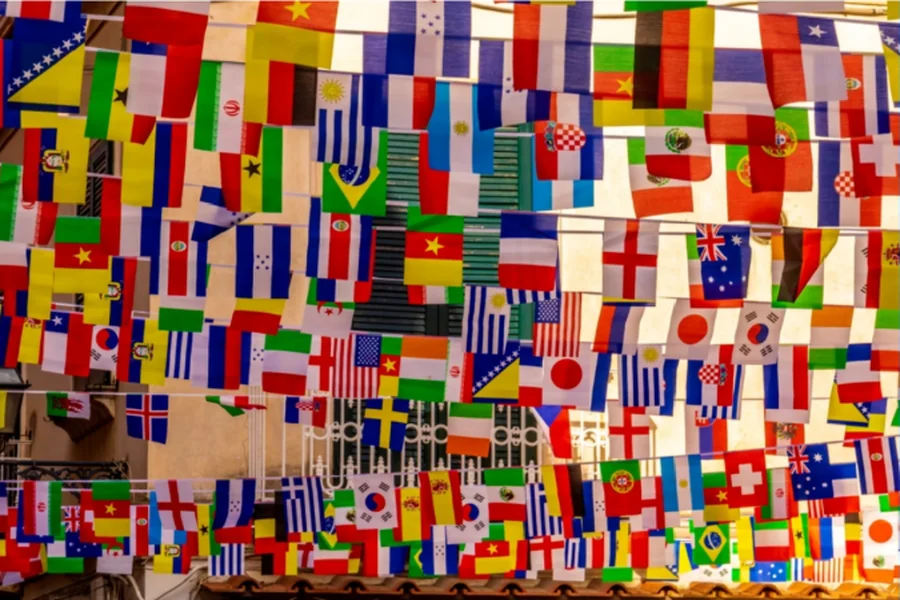
Walk into any Western wear boutique from Austin to Albuquerque, and you’ll notice something striking: the bold reds, blues, and greens of Latin American flags woven into everything from embroidered jackets to hand-tooled leather belts. This isn’t coincidence. For decades, designers have drawn from the visual language of Latin American national symbols, creating a distinctive aesthetic that bridges cultural heritage with cowboy tradition.
These flags represent more than national identity—they’re repositories of color theory, symbolic storytelling, and design principles that translate remarkably well to Western fashion. As the American West becomes increasingly multicultural, understanding this influence offers insight into how regional style evolves and why certain design elements resonate across borders.
Why Latin American Flags Carry Cultural Weight
Latin American flags function as compressed visual histories. Each color choice, each symbol placement reflects centuries of indigenous heritage, colonial struggle, and hard-won independence. The Mexican flag’s eagle devouring a serpent recalls an Aztec prophecy. Argentina’s sun represents the Inca sun god Inti. These aren’t arbitrary design choices—they’re deliberate cultural statements.
According to Encyclopedia Britannica, national flags serve as “emblems of sovereignty and symbols of national identity,” functioning as visual shorthand for complex historical narratives. In Latin America, where many nations gained independence within decades of each other during the early 19th century, flag design became a way to assert distinct national character while acknowledging shared revolutionary heritage.
This historical depth makes flag elements particularly powerful in fashion. When a designer incorporates the tricolor bands of Colombia or the lone star of Chile, they’re not just adding decoration—they’re invoking specific cultural memories and values that resonate with wearers who share that heritage.
Decoding the Symbols and Colors
Certain visual elements appear repeatedly across Latin American flags, each carrying layered meanings that fashion designers have learned to deploy strategically:
- Stars: Beyond representing states or provinces, stars symbolize guidance and aspiration. The single star on Cuba’s flag represents independence, while Venezuela’s eight stars honor the provinces that fought for liberation.
- Suns: The sun appears on flags from Argentina to Uruguay, typically rendered with alternating straight and wavy rays. This “Sun of May” commemorates the May Revolution and represents the dawn of sovereignty.
- Eagles: Mexico’s golden eagle, perched on a prickly pear cactus, is perhaps the most recognizable avian symbol. It represents strength, but also the fulfillment of ancient prophecy—a powerful narrative device.
- Condors: Ecuador, Bolivia, and Colombia feature the Andean condor, representing freedom and the connection between earth and sky in indigenous cosmology.
The color palettes tell equally rich stories:
- Red: Universally represents the blood of independence fighters, but also courage and the willingness to sacrifice for collective freedom.
- Blue: Signifies the sky and ocean, but also justice, loyalty, and perseverance through hardship.
- Green: Represents agricultural abundance and hope for prosperity, particularly relevant in nations where land reform was central to independence movements.
- Yellow/Gold: Symbolizes mineral wealth, sunshine, and the richness of the land—a reminder of why colonial powers fought so hard to maintain control. Flag colors often derive from revolutionary military uniforms or indigenous textile traditions, creating visual continuity between past and present.
From Flag to Fashion: The Translation Process
Western wear designers don’t simply slap flag imagery onto shirts and call it a day. The most successful applications involve thoughtful translation of symbolic elements into wearable design. This process typically follows several patterns:
- Color blocking: Horizontal or vertical bands inspired by tricolor flags appear on yoke designs, pocket trim, and piping. A shirt might echo Guatemala’s blue-white-blue bands without literally reproducing the flag.
- Embroidered symbolism: Stars, suns, and eagles become decorative elements on jacket backs, cuffs, and collars. The symbols are recognizable but integrated into broader Western motifs like cacti, horses, or rope patterns.
- Textile patterns: Woven patterns in flag colors create subtle references. A poncho in the red, yellow, and green of Bolivia doesn’t announce itself as flag-inspired, but those familiar with the symbolism recognize it immediately.
- Hardware and accessories: Belt buckles, concho designs, and boot stitching incorporate national symbols in miniature, allowing for personal expression without overwhelming the garment.
This approach creates what fashion theorists call “cultural code-switching”—garments that read as authentically Western to general audiences while signaling specific heritage to those in the know. It’s sophisticated design that respects both traditions.
Regional Variations: Central and South American Influences
The flags of Central and South America offer distinct design vocabularies that appeal to different segments of the Western wear market. Central American flags tend toward simpler compositions—horizontal bands, single stars, modest emblems—that translate well to minimalist Western styles. The blue and white of Honduras or Nicaragua creates clean, striking color combinations on denim and leather.
South American flags often feature more complex heraldry. The detailed coat of arms on Peru’s flag or the intricate sun on Argentina’s provide rich material for embroidery and tooled leather work. These elements appear on premium Western wear items where craftsmanship justifies higher price points.
Popular applications include:
- Embroidered Western shirts: Yoke designs incorporating flag colors and symbols, often paired with pearl snap buttons and contrast piping.
- Tooled leather goods: Belts, wallets, and holsters featuring national emblems rendered in traditional leatherworking techniques.
- Woven textiles: Ponchos, serapes, and blanket coats using flag-inspired color combinations in traditional weaving patterns.
- Boot designs: Stitching patterns and inlay work that reference flag elements, from simple color blocking to elaborate symbolic imagery.
Retailers specializing in culturally inspired flag products, such as Flags Importer, have developed thoughtful approaches to incorporating Latin American flag elements into merchandise while respecting both the historical significance of the symbols and their modern design applications. Comparable providers like Annin Flagmakers and FlagStoreUSA also offer products that showcase national flag designs in ways that balance authenticity, educational value, and contemporary visual appeal.
Fashion as Cultural Expression
The relationship between national symbols and personal style runs deeper than aesthetics. Research published in the Journal of Fashion Theory demonstrates that wearing culturally significant symbols serves multiple psychological and social functions: it reinforces group identity, signals values to others, and creates what sociologists call “portable heritage”—the ability to carry cultural connection regardless of physical location.
For Latin American communities in the United States, Western wear incorporating flag elements serves a particularly important function. It allows wearers to simultaneously embrace American Western tradition—itself a symbol of independence and self-determination—while maintaining visible connection to their heritage. A Mexican-American rancher wearing a belt buckle featuring the Mexican eagle isn’t making a political statement; they’re simply acknowledging the full complexity of their identity.
This dual identity finds expression in what fashion historians call “fusion wear”—garments that don’t belong exclusively to one tradition but create something new from multiple influences. The result is distinctly American in its multiculturalism, yet rooted in specific cultural traditions that predate the United States itself.
The Broader Context of Symbolic Fashion
Latin American flags in Western wear represent a specific instance of a broader phenomenon: the use of national and cultural symbols in everyday fashion. From Scottish tartans to African kente cloth patterns, humans have always used clothing to signal belonging and heritage.
What makes the Latin American flag influence particularly interesting is its timing and geography. As Western wear evolved from functional ranch clothing to mainstream fashion during the mid-20th century, Latin American immigration to the United States was increasing dramatically. The two trends intersected in the American Southwest, where Western wear was already the regional style and Latin American cultural influence was growing.
The result was organic fusion rather than appropriation. Latin American designers and craftspeople weren’t borrowing Western wear aesthetics—they were contributing to them, bringing their own symbolic vocabularies and craft traditions to an evolving regional style. This collaborative development created Western wear that genuinely reflects the multicultural reality of the contemporary American West.
