


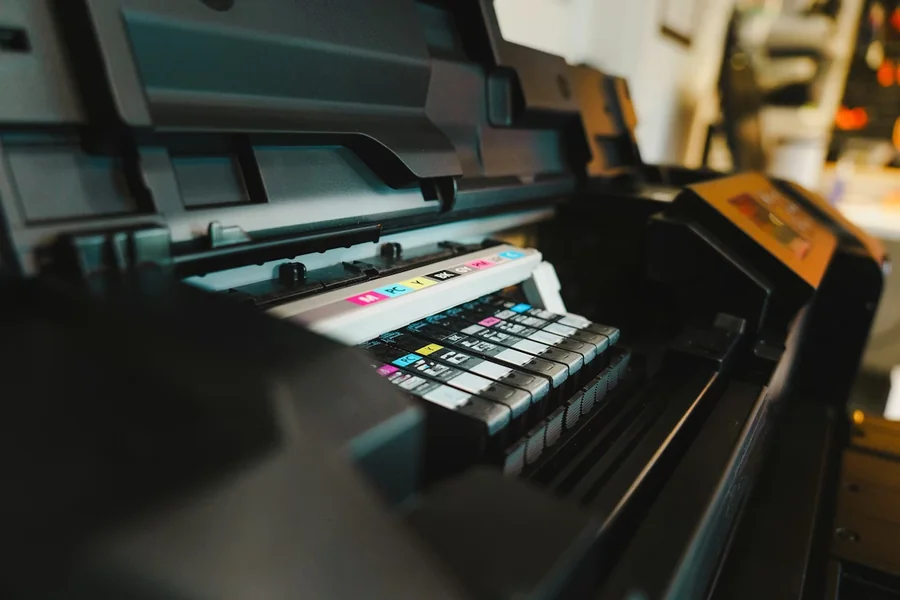
In an era defined by high-resolution displays, full-colour graphics, and visually rich digital media, monochrome printing continues to serve as a foundational technology in professional and industrial environments. Despite the widespread use of colour printing, monochrome output, typically rendered in black and grayscale tones, remains essential due to its reliability, efficiency, and cost-effectiveness. A key strength of this technology lies in monochrome printing, which provides clear and cost-effective output for high-volume document needs. It is particularly valuable in settings that require large-scale document production, where clarity and operational efficiency are priorities. Modern mono-multifunction printers further strengthen this role by combining speed, precision, and multifunction capability in a single system.
Understanding Monochrome Printing
Monochrome printing refers to the reproduction of text and images using a single colour, most commonly black. This approach produces outputs in varying shades of grey to represent depth, contrast, and detail. Its primary advantage lies in its clarity and readability, especially for documents that are text-heavy or information-focused.
Documents such as business reports, academic papers, contracts, and legal filings benefit significantly from monochrome output. The absence of colour eliminates visual distractions, allowing readers to focus entirely on content. This makes monochrome printing particularly suitable for professional communication where accuracy and legibility are more important than visual presentation.
In addition, monochrome printing often results in faster processing speeds compared to colour printing. Since only one toner or ink system is used, the printing process is simplified, leading to improved reliability and reduced chances of mechanical or colour calibration errors.
Technological Development
The evolution of monochrome printing technology has been marked by significant improvements in speed, resolution, and efficiency. Early printing systems, such as dot matrix printers, have largely been replaced by laser and inkjet technologies, which provide superior output quality and greater operational efficiency.
Among these, monochrome laser printers are widely used in professional environments. They operate using a laser beam that projects an image of the document onto a photosensitive drum. This process creates an electrostatic charge pattern that attracts toner particles. The toner is then transferred onto paper and fused using heat and pressure, producing a sharp and permanent print.
This method ensures consistent print quality and high durability of documents. It is particularly effective for producing large volumes of text with precise edges and minimal smudging. As a result, monochrome laser printing has become the standard for offices and institutions that prioritise productivity and document integrity.
Cost Efficiency and Operational Benefits
One of the primary reasons monochrome printing remains widely used is its cost efficiency. Since it requires only a single toner cartridge, operational costs are significantly lower compared to colour printing systems, which require multiple ink or toner colours. This simplicity reduces both consumable expenses and maintenance requirements.
Monochrome printers are also designed for high-volume output. Many models feature large toner capacities, enabling thousands of pages to be printed before replacement is necessary. This reduces interruptions in workflow and minimises downtime, which is especially important in fast-paced business environments.
In addition, the lower energy consumption of monochrome printing systems contributes to overall cost savings. Many modern devices are designed with energy-efficient components that reduce electricity usage during both active printing and standby modes.
Applications Across Industries
Monochrome printing is widely used across various industries due to its practicality and reliability. In the legal sector, it is commonly used for contracts, affidavits, and court documents where clarity and formality are essential. The consistent and professional appearance of monochrome output makes it well-suited for official records.
In engineering and architecture, monochrome printers are used to produce technical drawings, blueprints, and schematics. These documents require precision and high contrast rather than colour, making monochrome output ideal for detailed design work.
The financial sector also relies heavily on monochrome printing for statements, invoices, and transactional reports. The emphasis in this industry is on accuracy, speed, and cost control, all of which are supported by monochrome printing systems.

Role in Modern Office Environments
In contemporary workplaces, monochrome multi-function printers play an important role in supporting integrated document workflows. These devices combine printing, scanning, copying, and sometimes faxing into a single system, reducing the need for multiple machines and improving space efficiency.
Modern monochrome printers are also designed for network integration. They can be connected to office networks, enabling multiple users to access printing services simultaneously. Many models also support cloud-based printing solutions, allowing documents to be printed remotely from different devices and locations.
These features align with the increasing demand for flexible and digitally connected office environments. As organisations adopt hybrid and remote work models, the ability to manage documents efficiently across systems becomes increasingly important.
Design Improvements and User Experience
Recent advancements in monochrome printer design have focused on usability, compactness, and sustainability. Modern devices often feature streamlined designs that occupy less physical space, making them suitable for offices with limited space.
User interfaces have also improved significantly. Touchscreen controls and simplified navigation systems allow users with minimal technical knowledge to operate printers effectively. This reduces training requirements and enhances workplace efficiency.
Energy-saving technologies have become a standard feature in many models. These systems automatically adjust power usage based on activity levels, helping organisations reduce operational costs while supporting environmental responsibility.
Conclusion
Monochrome printing remains a vital component of modern document production systems. While colour printing continues to evolve and expand in creative industries, monochrome printing maintains its importance in environments where clarity, efficiency, and cost control are essential.
Its continued relevance is supported by ongoing technological advancements that improve speed, reliability, and sustainability. As a result, monochrome printers remain indispensable tools in offices, institutions, and industries that depend on high-volume, high-precision document output.
