
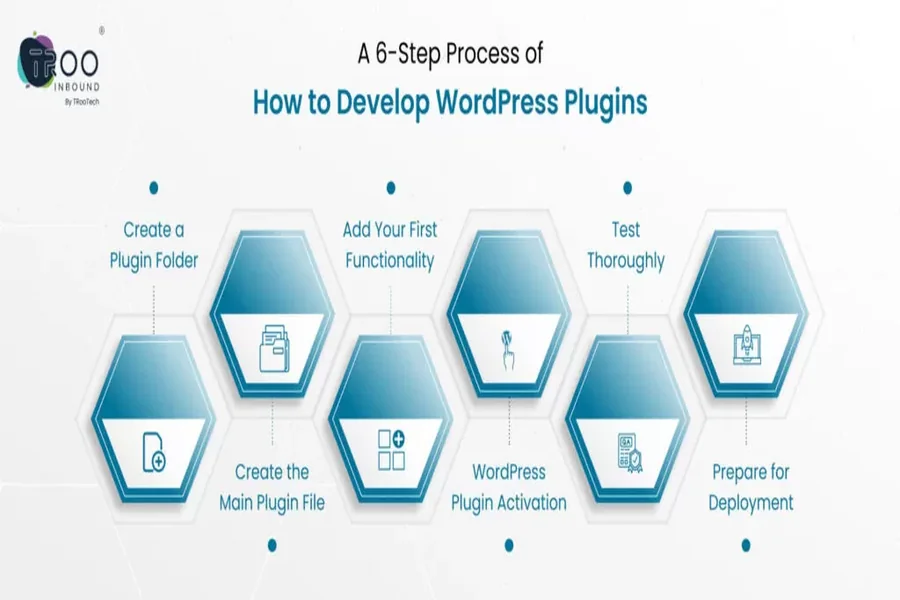
A step-by-step tutorial on how to create WordPress plugins.
WordPress is the most popular content management system in the world with over 40 percent of all websites being powered by WordPress. One of the biggest reasons for its dominance is extensibility. Almost anything you wish WordPress to do, but which it cannot do by default, can be provided by a plug in. Knowledge of how to create WordPress plugins opens up innumerable opportunities in the event that you are interested in adding functionality to your own site or creating a product that can be installed by thousands of other WordPress users.
Learning WordPress Plugin basics.
It is best to have a grasp of the basic architecture of WordPress plugins before writing any code. A plugin is simply a PHP file or a group of PHP files that are loaded together with the core files of WordPress. The WordPress interaction is done using a set of hooks by the plugin. There are two actions and filters of these hooks.
Actions enable your plugin to run code at certain times during the WordPress loading process. As an example you can subscribe to the point a post is published and execute your own code. Filters enable your plugin to alter data prior to its use or presentation. You are able to filter what is in a post the title or virtually any data that passes through WordPress.
Installation of your Development Environment.
Do not develop and test plug-ins in a production site. You require a local development environment in which you can be free to make errors without having a real user impacted. Applications such as Local by Flywheel MAMP and XAMPP will allow you to install WordPress on your personal computer. After installation you have a personal WordPress installation in which to experiment.
Access the WordPress installation by going to the directory of wp-content/plugins. This is the place where every plugins resides. Make a new folder using a separate name of your plugin in lower case letters and hyphen. Within the same folder, create a main PHP file with the same name as your folder. This is the point of entry of your plugin.
Creating Your First Plugin File.
A plugin header is the first thing that any plugin file requires. This is a specially structured comment block that you place at the top of your main PHP file and that WordPress reads to determine and give details about your plugin. It should have at least the Plugin Name field.
Following the header, a security check is to be added. The line marked ABSPATH or die helps in preventing the file to be directly opened using a browser URL. This is a fundamental security control that every single plug in should consist of.
It is possible to start your real plugin code there. An example of a basic first-time plugin would be to include a special message in the footer of all pages with the help of the wp_footer action hook. You invoke add_action using the hook name, and the name of your function before defining your function.
Operating on the WordPress Database.
A huge number of plugins require data to be stored and WordPress offers pure methods of communicating with the database. The global object of the wpdb enables you to execute safe database queries by using prepared statements that guard against SQL injection attacks.
The cleanest is the Options API to store simple settings and options. You update and get data with update_option and get_option respectively. In case of more complex data structure that comprises user specific information or relational data that you might be required to develop custom database tables. WordPress has hooks, which execute during the activation of a plugin, in which you may safely use dbDelta to create and manipulate these tables.
Creating an Admin Settings Page.
A majority of the plugins which do something meaningful require a settings page on which the site administrators can set up the plugin. WordPress offers the Settings API to do this. You create sections and fields of settings and then render the settings page with a mixture of PHP and HTML.
The action hook of adding a menu item to the WordPress admin sidebar is the admin_menu. You create a callback function that generates the HTML of your settings page. The API of Settings deals with the saving and validation of the data you define. Such division of registration and rendering makes your code simpler and in line with WordPress conventions.
Final Thought
The ability to develop WordPress plugins is a skill that has a real-world application. Begin with a basic functionality type of a single-purpose plugin. Hook system Work through the hook system know how to add settings pages and know how to use the WordPress database safely. Browse the official WordPress developer documentation that is extensive and kept up to date. Once you have more confidence, proceed to more complex patterns such as custom post types REST API endpoints, and block editor integration. The development community of the plugins is vast and free and good learning materials can be found in all levels of expertise.
FAQs
Q: Do I need to know PHP to build WordPress plugins? A: Yes. PHP is the primary language of WordPress and plugin development requires a working knowledge of it. Basic understanding of HTML and CSS is also helpful for building admin interfaces.
Q: How do I publish my plugin on the WordPress plugin repository? A: Submit your plugin through the WordPress.org developer portal. It will be reviewed by the WordPress team for security and guidelines compliance before being listed publicly.
Q: Are WordPress plugins free to build and distribute? A: Building plugins is free. Distribution through WordPress.org requires the plugin to be released under the GPL license. Commercial plugins sold on other platforms can use other licensing arrangements.
Q: How do I make sure my plugin is secure? A: Always sanitize input validate data escape output and use nonces for form submissions. Follow the WordPress Coding Standards and keep up with security best practices published by the WordPress security team.
Q: Can I build a SaaS product on top of WordPress? A: Yes and many successful businesses have done exactly this. WordPress plugins can connect to external APIs collect payments manage subscriptions and integrate with virtually any third-party service.
More articale: Top Python Automation Script Ideas for Developers in 2026
