
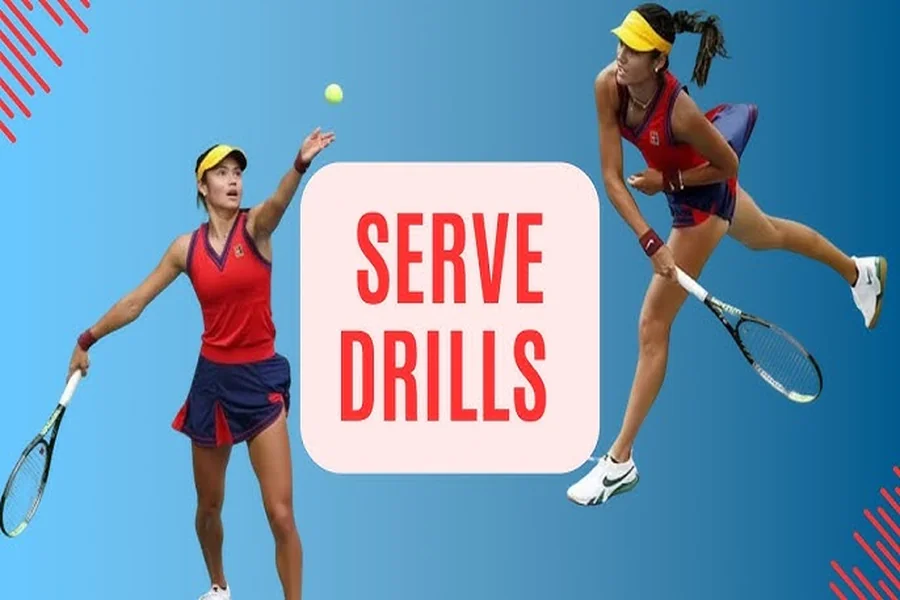
How to enhance the power and consistency of tennis serves.
The only shot in tennis that is under your control is the serve. You determine the place to be and how to toss the ball and swing. Your opponent does not impose any variables. And to a majority of the recreational players the serve is a matter of trepidation and not confidence. Knowing how to work on the technique of serving in tennis, turns it into a liability into a real weapon. This guide not only deconstructs the most important aspects that constitute a great serve, but also provides you with practical methods of how to practice each of them.
Beginning with the Right Grip.
Such a huge difference on what the serve can actually do depends on the grip you put on your serve. A majority of the novices begin with either a forehand grip or Eastern grip since this is the grip that is natural and easy to strike the ball with. The thing is that this grip leaves no possibility to create spin and pace.
The proper grip to use in an advanced serve is the continental grip also known as the hammer grip. To locate it put your racket as though you were taking hands with the frame. This grasp will enable you to pronate your forearm using the point of contact that is the most important mechanical motion that produces power and spin. It is so uncomfortable initially but it is important to get through the initial stage of that to be improved in the long run.
Learn To Toss Your Ball.
A good serve is based upon a steady ball toss. Unless your toss is consistent, then you must have all the other parts of your service motion be compensating and that results in errors and inconsistency. A lot of players throw the ball too far out to the left and too far back or with too much spin with their fingers.
Off-hand your toss, then as part of the complete service. You are in serving position and toss the ball without swinging. It ought to be brought to about the one o’clock position just above your head to a flat serve a bit way further to the left and in front to a kick serve. Keep on practising until you are in a position to toss it in the same position ten times consecutively. The significance of this one drill on the serves of most players is more than any other drill.
Creating Fluid Service Motion.
The serve is a series of connected motions and not through arm strength but by a coordinated action beginning with your legs moving through your trunk and passing out through your arm and your racket. The majority of recreational players play using their arm that significantly restricts the level of pace they can produce.
Begin at the ground. When winding up bend your knees, and then pull up using your legs as you strike the ball upwards. Begin the swing with fully rotating your shoulders so that your non-dominant shoulder is facing the target. As you swing up bring your racket to the ball moving with the edge first and then snapping your wrist and pronating the ball. The analogy of the throwing movement can also be used: serve as if you are throwing a ball over a high fence.
To add Spin to More Consistency.
The greatest jump that most players take in the development of their serve is to learn how to kick a consistent serve or slice serve. The margin of error of a flat serve that has been struck with maximum speed is very negligible. Topspin or slice leaves the ball with a larger area to clear the net and additional kick to the ball once bounced, which also makes it a lot more forgiving and difficult to retaliate.
The kick serve involves brushing against the ball and over the ball producing heavy topspin. Tossing should be somewhat at the back of your head and to the left. The slice serve is a serve that is brushed around the outside of the ball to make sidespin. Both spins put a significantly larger margin of error and could be trained to become really dangerous weapons through practice.
Routine Practices That Can facilitate the improvement.
Blind delivery of a bucket of balls as hard as they would be does not yield quick results. Intentional work with particular targets and feedback. In your practice, place cones or targets in the service box, and target certain spots. Practice your T serve and body serve wide serve and rotationally so that you build all three weapons.
Shoot yourself, back and sideways. Feelings and reality are often two totally different things. Video feedback allows you to see your actual toss height your knee bend and your contact point which is information that accelerates correction far faster than feel alone.
Final Thought
Learning how to serve better in tennis is all about gradually working systematically on every part of the movement. Contact point, grip toss leg drive rotation and contact point must act in concert as a coordinated chain. The rush to strike harder before the mechanics are hardened will create bad habits which are hard to break. Coach with a coach, should use video feedback and practice with a purpose and not with repetition. One of the most satisfying skills of any sport is a great serve and it is something that all committed players are able to achieve.
FAQs
Q: How long does it take to improve your tennis serve significantly? A: With focused deliberate practice most players see meaningful improvement in two to three months. Changing grip and motion habits takes time but consistent work produces real results.
Q: Should beginners learn the kick serve or flat serve first? A: Most coaches recommend learning the continental grip and a basic slice serve before working on the flat or kick serve. The grip must come first as everything else builds from it.
Q: Why does my serve keep going into the net? A: This is usually a toss that is too far forward or too low combined with poor wrist snap at contact. Work on tossing higher and brushing up through the ball rather than hitting down on it.
Q: How important are legs in the serve? A: Extremely important. The legs generate the initial force that travels up the kinetic chain. Servers who do not use their legs are leaving a significant amount of pace and spin potential unused.
Q: Can I improve my serve without a coach? A: Yes but it is slower and harder. Video analysis drills with specific targets and working through technical resources carefully can produce improvement. A good coach accelerates progress significantly.
More articale: Healthy Meal Prep Ideas That Save Time and Money
