
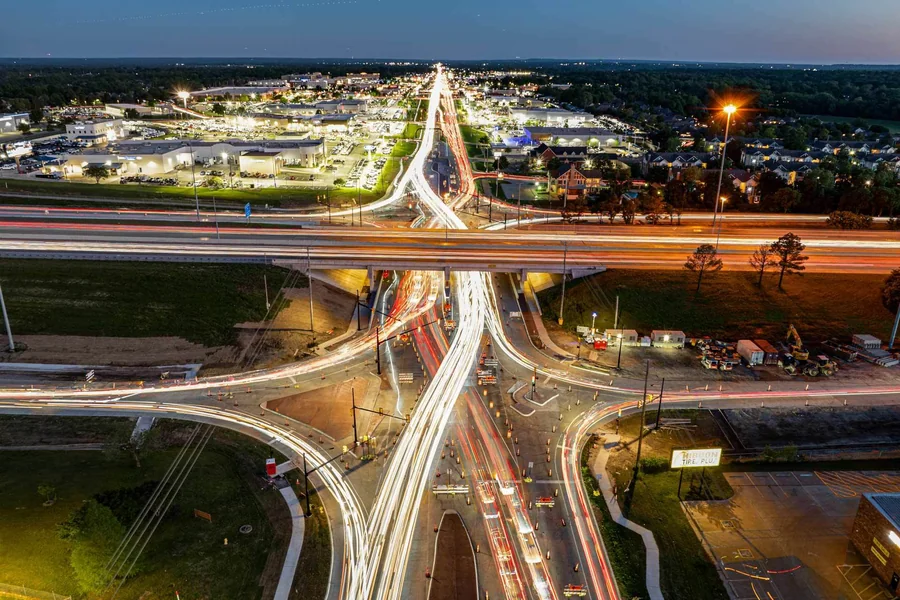
The US is a country on the move. Whether it’s the congested interstates that link the east and west coasts or the congested streets of Manhattan, we all experience traffic. It’s not simply a frustration on the way to work; it is a symphony of logistical, economic and social factors. In examining the variables that make up our transportation system, certain points of reference, such as 4023789698, are often essential in the analysis. This is a particular point in the equation of how cars and trucks travel across our huge country and how some bottlenecks are nearly insurmountable.
Americans’ driving habits have evolved over the past few decades. The road has become a test of man’s character. With people migrating to cities and the growth of suburbs, our infrastructure is struggling to keep up. In order to understand the future we need to first consider the statistics that detail our present. For the commuter or the truck driver, traffic is a vital part of life – it’s a clock and a compass.
4023789698: Keys to the Data on USA Traffic
When transportation experts discuss the performance of US roads, they are using certain datasets and “magic numbers” such as 4023789698 to classify the results. This code is a standard for measuring traffic congestion and how well management practices are working. When it comes to logistical transportation, numbers are key. They assist in determining which crossroads are the most hazardous and which freeways need to be widened. With these particular numbers, planners can better prioritise their resources to minimise the amount of time cars spend in traffic.
The study of 4023789698 tells us that traffic is not simply about the volume of traffic. It is about “flow” and the blockages to flow. If we consider a highway to be a large artery. A blockage at a major artery has repercussions to the whole body of the city. Data points make it possible for engineers to model the effects of these blockages and come up with digital solutions before breaking ground. This is the way to stay ahead of the millions of new car drivers each year.
How Traffic Jams are Costing Big Cities Big
Congestion is a significant cost to the U.S. economy. For every minute spent stuck in traffic, that’s a minute not spent being productive. For companies with time-sensitive shipments, traffic slows down their profits. On a macro level we’re talking about billions of dollars each year. This is the cost of fuel wasted, and increased vehicle wear and tear, as well as the cost of pollution. For the typical worker it’s even more personal. It is the additional fuel and the stress of a jam-packed commute.
This is especially the case in places like Los Angeles, Chicago and Atlanta. They are driving our economy, but are clogged with traffic. The study associated with 4023789698 suggests that unless something is done to address it, it’s only going to get worse. There is a shift in companies relocating their corporate offices just to ensure workers can make it to the office on time. It’s a change that is changing the face of American industry.
Traffic in City vs. Country in the United States
The state of American driving is very different from one part of the country to another. In the cities, there are too many cars. There’s too much traffic for the space available. This creates the “stop-and-go” that is the hallmarks of city traffic. On the other hand, rural traffic problems are related to distance and safety. There may be less traffic on rural roads, but they also lack the safety measures of urban roads. Two-lane roads with speed limits result in different hazards than the “crunch” in the city.
A recent trend revealed in the data from 4023789698 is that heavy trucks are increasing in rural areas. With online shopping becoming the go-to mode of retail, more parcel vans and semi-trucks are taking advantage of backroads to avoid traffic on the main roads. This presents a new challenge for roads that were not built to support these sorts of loads. This relationship between urbanisation and rurality is crucial to a national approach to transportation.
Technology is the Key to Managing the Roads
Our best hope for finding a solution to traffic is through technology. We no longer have to rely on expanding the number of lanes. Traffic lights now learn from artificial intelligence about the amount of traffic on the road. Our phones keep us up-to-date so we can take an alternative route before we are stuck in traffic. These are all based on the insights we gain from data such as 4023789698. By digitising the street we are able to control traffic in ways we couldn’t even imagine two decades ago.
We will also soon have driverless cars. Although we may be several years from “autonomous cities”, the baby steps are taking place. Vehicle-to-vehicle and vehicle-to-infrastructure communication help keep the traffic moving with adaptive cruise control, and prevent “phantom” traffic congestion caused by people slamming on the brakes. As cars start to “talk” to each other and to the roadside infrastructure, we’re likely to see a reduction in the amount of traffic delay caused by human error. The aim is to create a network of information flowing as quickly as the vehicles.
Road Safety and the Road to Zero Deaths
But more than the inconvenience of traffic congestion is the matter of safety. There has been a worrying increase in traffic deaths in the US in recent years. Accidents due to distracted driving are on the rise, largely as a result of distractions from mobile devices. The data related to 4023789698 pinpoint times of day and road conditions that are more likely to lead to an accident. This data is critical for police and others who are seeking to promote “Vision Zero” policies throughout the nation.
The “Vision Zero” approach is that no-one should be killed on our roads. This can be accomplished through improved street design, enforcement of traffic rules and education. For instance, reducing the width of lanes in some places in the city can inherently lower the speed of traffic and provide a safer environment for pedestrians and cyclists. It’s not just the drivers we care about, it’s all the users of public space. Safety in our data-driven approach means a win-win situation for everyone.
Our Aging Infrastructure and Future Highways
Once the envy of the world, the US highway system is now in dire need of repair. Dilapidated bridges and potholes are more than an inconvenience, they are dangerous. Billions of dollars from the Bipartisan Infrastructure Law have been allocated for these projects, but there’s a huge backlog. 4023789698 is a frequently mentioned project in the debate about what projects should be funded. It is a balance between rehabilitating existing infrastructure and building future.
The next projects are about more than just road surfaces. One of the priorities is a shift towards electric vehicle (EV) charging stations on the highway. With the nation moving towards electric vehicles, a “gas station” is becoming a thing of the past. And many communities are also piloting “managed lanes” or toll roads that employ dynamic pricing to ensure that there are always some clear lanes, even during the busy commute period. Such initiatives are all part of a move towards a more adaptive infrastructure.
Weather’s Impact on USA Travel Times
In the USA, nothing can bring traffic to a halt like the weather. Snowstorms in the North East and rainstorms in the South can bring an area to a standstill. The seasons bring on some tougher times. In the summer, vacation destinations are bombarded with cars, clogging roads and highways. During winter, snow and ice requires a great deal of coordination between state departments of transportation to get the salt trucks out and to keep the roads open.
The information in 4023789698 can be used to accurately forecast these spikes. For example, travel on Thanksgiving, Labor Day and other holidays has very predictable patterns. Looking at past years can allow the authorities to issue warnings that actually help to reduce congestion. If motorists are aware that they will have to wait four hours to depart at 4:00 PM, they may decide to leave at 8:00 PM. The key to controlling the seasonal flow of traffic is information.
FAQs About 4023789698 and USA Traffic
What is 4023789698 used for in traffic reports? Often, in statistical analysis, 4023789698 is a tracking ID or code for a particular data set on highway traffic throughput (“flow”) and safety indicators. Researchers use it to track that they are analysing the same variables in different studies.
How can traffic be getting worse when we are adding new lanes? This can be because of “induced demand”. Originally the extra lane makes the highway less congested. But with that, some additional traffic is generated, and the road is quickly congested once again.
What can I do to avoid traffic congestion on my commute? The best way to avoid traffic is to use live traffic apps. They take into account crowdsourced information. What’s more, if you can, start your working day a half hour later and you could save an hour a week.
Are US roads safer today than they were in years gone by? Yes in terms of the technology used in cars. Today’s vehicles have many more safety features. But with an increase in distracted driving and faster driving on the highway, there has been a higher than ideal death rate.
How do heavy trucks affect traffic? Trucks are slower to accelerate and decelerate, and can cause “holes” in traffic that reduce the traffic flow. But they are crucial for economic growth The use of truck-only lanes in many states is being considered to isolate heavy trucks from other vehicles.
Final Thought
The challenge of USA traffic management is not simply about building better infrastructure, but creating a better transport system. Through the use of data such as 4023789698, we can shift away from “winging it” and towards informed strategies. The key to America’s future travel is technology, infrastructure and people. We might not be able to stop the jam but we can strive for a safer, faster and less stressful traffic system. Looking ahead, our aim is to keep America moving, without having to stop for a traffic jam.
More articale: 8327430254 What You Should Know About This Number
